
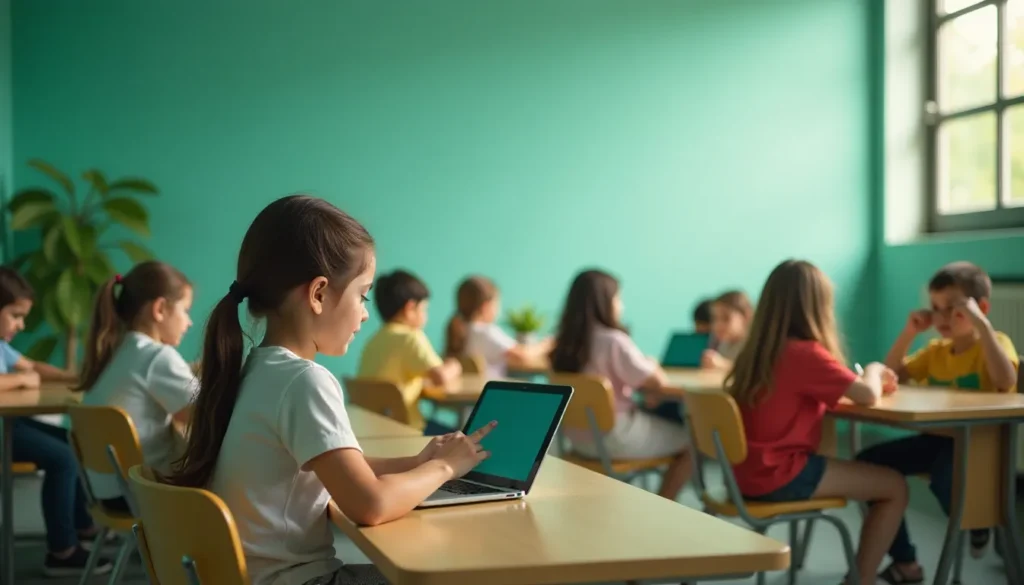
The use of social media is essential for early childhood education institutions, as it strengthens the engagement of parents and students. In this article, we will explore how digital marketing campaigns can transform the educational experience, creating a valuable connection in the early education process and highlight the importance of effective communication in this scenario.
Importance of Social Media in Early Childhood Education
Social media has become an indispensable tool for early childhood education institutions, enabling not only the strengthening of digital presence but also direct engagement with parents and students. Understanding the importance of these platforms is essential for creating effective communication that reaches and mobilizes the school community. Social networks provide an interaction channel where information can be shared quickly, allowing schools to keep parents informed about relevant events, activities, and news.
In addition to facilitating communication, social media acts as a virtual stage where institutions can present their values and educational philosophy in a more attractive and accessible way. This is important as many parents seek information to make decisions about their children’s education, and by viewing authentic and engaging posts, they feel more connected to the school. Real-time interactions also enhance the sense of community, allowing parents to share their experiences and interact with each other, forming a fundamental support network in early childhood education.
Engagement on social media is not limited to unidirectional communication; schools can promote meaningful dialogues. Through comments, messages, and reactions, parents have the opportunity to express their opinions and contribute to discussions about their children’s education. This exchange not only strengthens the relationship between the school and families but also helps the institution calibrate its pedagogical practices and adapt its campaigns according to the needs and expectations of parents.
Another significant advantage of social media is the ability to measure results and assess the effectiveness of campaigns. The analytical tools available on these platforms allow institutions to identify which types of posts generate more interaction and engagement, thereby adjusting their strategies to increase visibility and the impact of educational actions. This creates a feedback loop that can be extremely beneficial, providing valuable insights into what truly matters to the school community.
Thus, the effective use of social media is a crucial step in building a more collaborative and engaging educational environment, reflecting the essence of contemporary early childhood education, which values the active participation of parents and the holistic development of children. With an understanding of the importance of these platforms, the next step is to explore the types of content that can be used in campaigns to maximize this engagement.
Types of Content for Campaigns
Creating relevant content is one of the pillars of social media campaigns, and for early childhood education institutions, this becomes even more vital. Educational posts about child development are an excellent way to keep parents and caregivers involved. Sharing information about growth phases, emotional and social skills that children should develop can help families better understand what is happening in their children’s school lives, as well as guide them at home.
Furthermore, videos of school events stand out as a powerful tool to bring the school community closer together. These visual productions allow parents to feel actively part of school activities, such as birthday parties, presentations, and assemblies. Showing the vibrancy of the school environment, highlighting the interaction between teachers and students, helps create a positive image of the institution and provides a sense of belonging for families.
Tips for parents on education at home also have a significant impact on social media campaigns. By offering practical advice on how to stimulate learning outside the classroom, institutions can show they care about the overall development of children. Suggestions for activities that can be done at home, such as reading together or educational games, along with strategies to create an effective routine, demonstrate a commitment to the well-being and comprehensive education of students.
Success stories of students are highly motivating content that can be shared on social media. Accounts of children who have overcome difficulties, achieved goals, or showcased exceptional talents not only inspire other families but also strengthen the school’s image as an environment that values and recognizes each student’s potential. These narratives can be presented in written posts, short videos, or even interviews with students and their parents.
Content should be varied to maintain the interest of followers, creating a continuous cycle of engagement and interaction. This diversity ensures that the audience remains attentive and eager for new information and experiences while solidifying the institution’s digital presence. When planning campaigns, it is essential to align each type of content with the school’s mission and values, thus creating a sincere and relevant dialogue with the community.
Considering the continuity of this engagement, it is essential to develop effective strategies that can enhance these approaches and strengthen the bonds between the school and families.
Strategies for Engagement
Developing effective strategies is fundamental. Some tactics include:
- Regular interactions with the community;
- Conducting online contests to encourage participation;
- Series of posts on educational topics;
- Parent feedback through polls.
These actions create a strong bond between the school and families. Regular interaction with the school community can be achieved through posts encouraging comments and discussions, as well as inquiries seeking to understand parents’ needs and expectations. Creating an open channel for dialogue fosters a sense of belonging and involvement, ensuring everyone feels part of the educational process.
Conducting online contests can be a fun way to stimulate engagement. For example, a photography competition where parents share special moments with their children related to education can generate significant interaction. In addition to creating enriching visual content for social media, this practice connects the school community and strengthens family ties. Prizes for the most creative entries can also provide extra motivation, generating enthusiasm and engagement.
Series of posts addressing educational topics can enrich the institution’s communication with parents. Topics ranging from literacy tips to strategies for helping children develop social skills can be presented in a format that facilitates reading and sharing. This not only positions the school as a reference on the subject but also engages parents in a continuous process of learning and exchanging experiences.
Finally, parent feedback can be a valuable tool for understanding the community’s perception of the school’s initiatives. By presenting polls and questionnaires on social media, the institution can identify areas for improvement and new interests, strengthening the relationship and promoting an environment where everyone feels heard and valued. These practical strategies pave the way for the effective use of social media tools, which will be discussed in the next chapter.
Social Media Tools
Utilizing the right tool can facilitate campaign management. In today’s digital environment, social media platforms become indispensable allies for early childhood education institutions looking to connect with parents and students. Each social network presents unique characteristics that can be strategically exploited.
Facebook, for example, is particularly effective for forming parent groups. These virtual communities allow institutions to maintain constant and close communication, facilitating the sharing of information, doubts, and experiences. Groups can be used not only to disseminate school news but also to promote discussions on topics related to child development, such as the importance of reading or playful learning strategies.
Instagram, on the other hand, stands out as a visual platform, ideal for sharing images and videos that capture children’s daily life at school. Posts can include photos of activities, projects, and events, creating a space to celebrate the school community’s achievements. Stories, a feature of Instagram, also offer a valuable opportunity to showcase what happens in real-time, increasing parents’ sense of proximity and participation in the educational routine.
YouTube is a powerful tool when it comes to video content. Institutions can develop videos explaining teaching methodologies, showcasing testimonials from parents and students, or producing educational materials accessible to all. Audiovisual content is highly engaging and can be easily shared, expanding the school’s message reach.
Twitter, on the other hand, is suitable for quick updates. With an audience seeking instant information, schools can use this platform to communicate events, changes in programming, or important alerts. Micro-posts allow the institution to stay relevant in parents’ minds, creating constant anticipation for the next update.
Each platform thus serves a unique purpose and can be strategically used to engage parents and students in early childhood education. By choosing the correct tools, the school becomes not only a place of learning but also a hub for active and engaging communication. Next, the issue of measuring results becomes imperative to understand the effectiveness of these campaigns and enhance future interactions.
Measuring Results
Assessing the success of social media campaigns for early childhood education institutions is vital for adjusting strategies and ensuring meaningful engagement between parents and students. To achieve this, it is essential to use tools and metrics that provide a clear analysis of the performance of the actions taken. Using Google Analytics is a great way to monitor access to the institution’s website, allowing one to check which content attracts the most visitors and which paths users follow. This not only guides decisions on what type of post to increase but also helps identify peak traffic periods, facilitating the scheduling of future campaigns.
Additionally, generating engagement reports on social platforms is crucial. These metrics provide a detailed overview of how many people interacted with posts, the reach of publications, and how the audience behaves concerning the different formats offered, whether videos, images, or texts. Identifying the content that generates the most interaction can guide future productions and actions on social media, further optimizing the efforts made.
Another valuable approach is obtaining direct feedback from parents and students. Conducting opinion surveys or creating discussion spaces on social platforms allows the institution to understand more humanly and directly what is working and what needs improvement. This interaction not only helps improve communication strategies but also brings the school community closer, making parents and students feel heard and valued.
Furthermore, sharing and likes metrics are indicators that the content is resonating with the audience. Content that generates many reactions and is shared has the potential to reach a larger audience, amplifying the institution’s message. This aspect is crucial, as social media largely operates through recommendations and shares between users. By analyzing which posts receive the most attention, the institution can replicate this strategy in other campaigns.
With careful analysis of this data, it is possible to develop a continuous optimization process that is always aligned with the expectations and needs of the school community. This measurement dynamic not only improves current campaigns but also creates a productive cycle of feedback and continuous improvement, preparing the ground to face the challenges and explore the opportunities that arise in the realm of social media.
Challenges and Opportunities
Recognizing challenges in social media campaigns helps in overcoming them. Some of the main challenges include:
- Content saturation, where many compete for attention;
- Crisis management, such as negative comments;
- Adaptation to new trends that emerge quickly.
Content saturation is a reality in a world where people are bombarded daily with information. In this scenario, capturing the attention of parents and students becomes more complex. Early childhood education institutions need to stand out with authentic and creative proposals. One way to do this is through narratives that evoke emotions and connect using success stories of students, testimonials from satisfied parents, and content that reflect the institution’s values. It is essential that these approaches are well-planned and distributed strategically to ensure visibility amid a sea of information.
Crisis management is another critical aspect to be observed. Negative comments, when not addressed properly, can damage the institution’s reputation. Having a response plan for negative interactions on social media is vital. Instead of ignoring criticisms, it is important to respond with empathy and clear solutions. This stance not only helps resolve conflicts but also demonstrates to the public that the institution values the community’s opinion, which can strengthen trust and the relationship.
Adapting to new trends is an opportunity that should be viewed optimistically. The digital environment is constantly evolving, with new tools and formats emerging frequently. Staying updated on the latest trends can provide the institution with a significant competitive advantage. Investing in training for teams and collaborating with digital marketing professionals can facilitate this adaptation, allowing the institution to not only keep up with but also lead these innovations.
However, each challenge brings an opportunity for innovation and improvement. Every difficulty faced can serve as a springboard for developing more effective strategies. For instance, when dealing with content saturation, the institution can explore different formats, such as interactive videos and lives, strengthening the relationship with parents and students. Quickly identifying and reacting to criticism can also turn into a valuable feedback channel, allowing for continuous improvements in services and communication.
Thus, despite the challenges of social media campaigns being significant, they also offer rich opportunities for growth and enhancement. Through careful analysis and a proactive approach, institutions can not only face these obstacles but also transform them into levers for even greater engagement. This establishes a clear path for developing campaigns that truly resonate with the community, preparing the ground for concluding the significant role of social media in early childhood education.
Conclusion on Social Media Campaigns
Social media campaigns play a crucial role in communication between early childhood education institutions and families. Through these platforms, schools can share essential information, such as event calendars, school activities, and education tips, facilitating access to content that interests both parents and students. Well-planned content can generate meaningful interactions, creating a sense of belonging in the school community and promoting transparency in institutional actions.
One of the most important aspects of social media campaigns is the ability to personalize communication. By utilizing videos, images, and stories, it is possible to showcase the school routine, the projects developed by children, and testimonials from parents and teachers. This humanization of content generates identification and can positively influence the decisions of new parents when choosing the institution for their children. Additionally, promoting challenges or contests on social media can encourage them to engage more actively, both online and in school life.
Another effective strategy is the use of exclusive groups and communities for parents on social media. These spaces allow enriching discussions and experience sharing among members. Institutions can moderate these groups, ensuring a welcoming and safe environment where the focus is on children’s well-being and educational development. Constant interaction and the offer of real-time support help strengthen the bond between the school and families, creating a fundamental support network in the educational process.
Furthermore, monitoring and analyzing the results of campaigns is essential for long-term success. Utilizing data analysis tools allows institutions to understand which content generates the most engagement, allowing for continuous adjustments to communication strategies. This feedback loop is vital for creating more effective and dynamic campaigns.
In summary, social media campaigns are essential for early childhood education institutions. They promote engagement and help form a united school community. For more robust support, consider consulting XTYL, which specializes in digital marketing and paid traffic.
Conclusion
Social media campaigns for early childhood education institutions not only increase community engagement but also enhance the institution’s image. Investing in digital strategies is crucial to reaching parents and students in today’s context, promoting a more inclusive and interactive educational environment.


